
About
I am a researcher in the Brain-Inspired AI Lab at Vanderbilt University, where I study how learning dynamics unfold over time in both brains and models, with a particular focus on curriculum learning, human representational alignment, and critical periods. I am especially interested in how biological and artificial systems respond to different forms of disruption across development or training, and how temporally-sensitive phases of learning influence what is acquired, what is lost, and what can be recovered. I bring prior experience in neuroimaging and clinical psychology research, including translational work in schizophrenia, which informs my interest in linking neural, behavioral, and computational levels of analysis to better understand brain function and dysfunction.
Research Interests
Current Research Projects
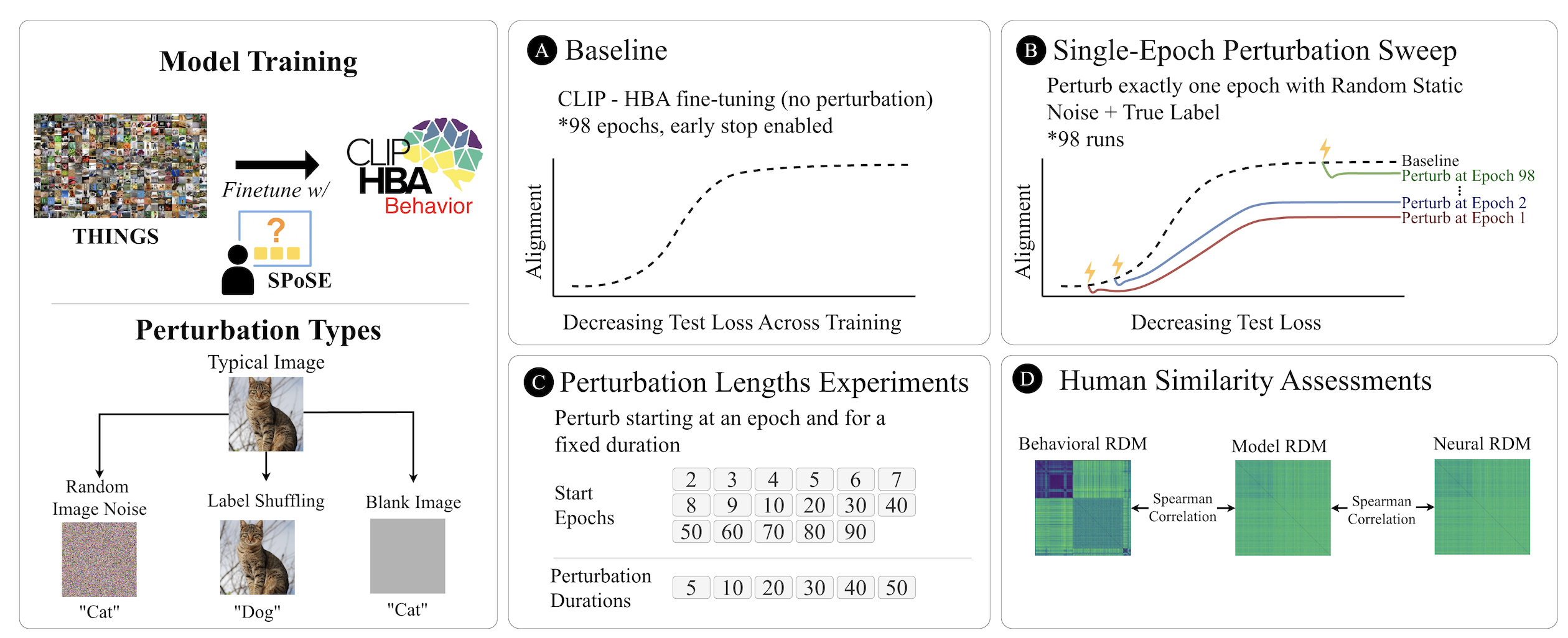
Probing Critical Periods in Model Learning
Investigating learning dynamics of models using disruptive perturbations at various training stages to identify critical periods that significantly influence model performance and representation formation. By applying targeted disruptions during training, we aim to understand how these interventions affect learning trajectories, generalization capabilities, and the development of internal representations. This research seeks to uncover parallels between artificial learning processes and biological critical periods, providing insights into optimizing training protocols for enhanced model robustness and adaptability.
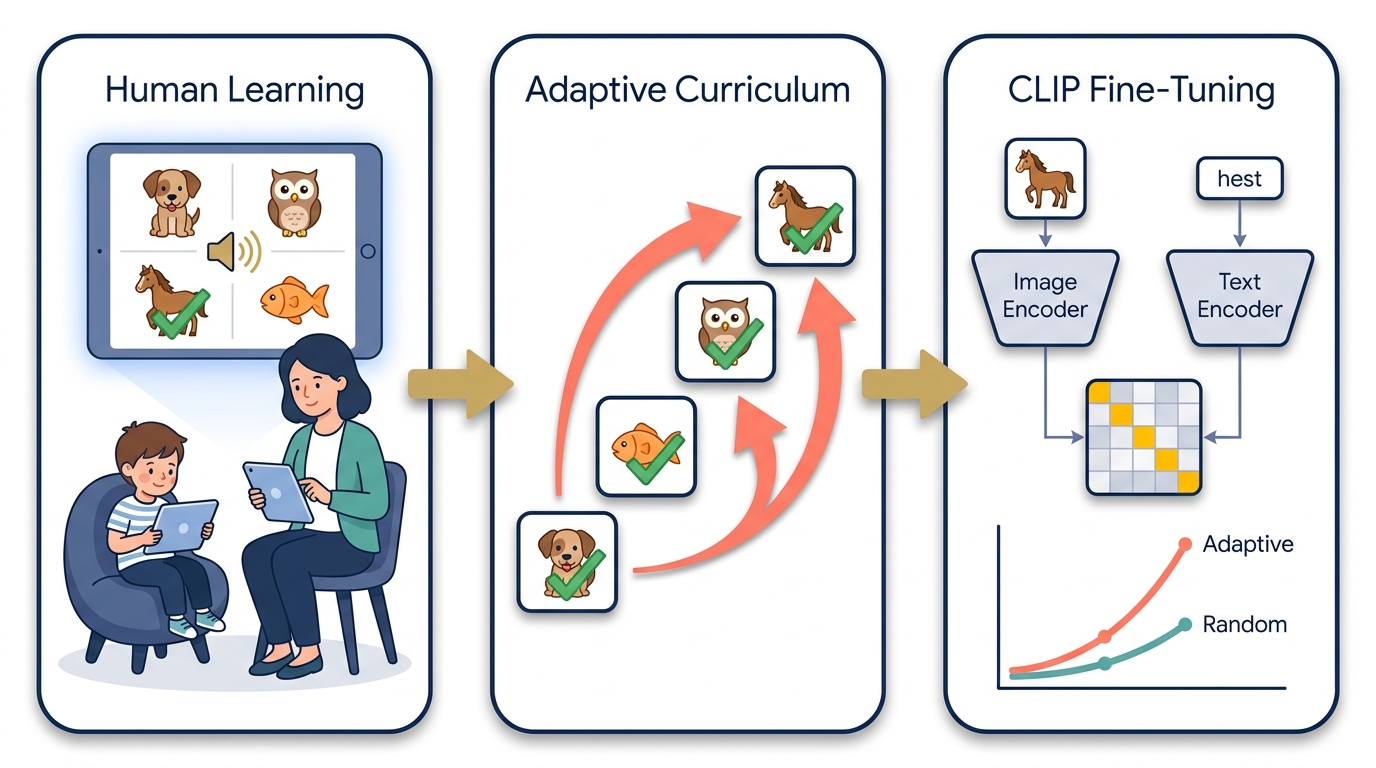
Developmental Adaptive Learning Experiment (DALE)
DALE investigates whether the way children learn can make machine learning more efficient. Using a contrastive learning task in which participants pair spoken Danish animal words with images, we quantify how the benefit of adaptive versus random learning changes from childhood through adulthood. The order and pace at which learners master each word are then used to build epoch-specific training curricula for vision-language models: we fine-tune CLIP under adaptive, random, and mixed curricula and compare them against standard training regimes, measuring both task performance and how closely the model's internal representations come to resemble human ones. The broader question is whether human developmental learning trajectories carry structure that is genuinely useful to artificial systems, and whether AI can serve as a testable model of human cognitive development.